

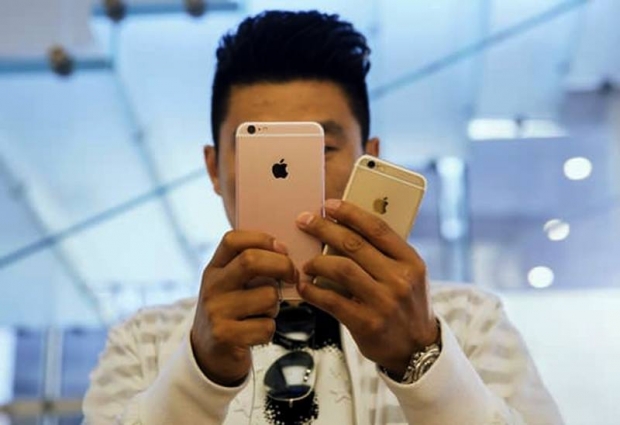
The beginning of September once again finds an embattled Apple heading into what is hyped as its most critical iPhone launch yet. In previous years, hand-wringing about innovation drying up in Cupertino (“It looks just like last year’s model! All they did was increase the screen size!” etc) has not prevented record-breaking sales and unprecedented profits, according ft.com. Yet in previous years, iPhone sales were not in decline before Tim Cook stepped on stage, and Apple was not fighting a multibillion-dollar bill for alleged unpaid taxes from the European Commission.
Can the iPhone 7 — assuming it is called that — put Apple back on the front foot? Observers are divided.
“The industry and consumers collectively are hoping for something brand new and jaw-dropping. That’s probably not what the iPhone 7 is,” warns Wayne Lam, smartphone analyst at IHS Technology.
Amit Daryanani at RBC Capital Markets is more optimistic. “Given a backdrop of tempered expectations (everyone is talking about iPhone 7S already!), we think this event has the potential to incrementally surprise investors on the upside,” he wrote in a recent note.
Here are five things to watch when Wednesday’s event begins at 10am local time in San Francisco.
Wireless headphones
The worst-kept secret about Wednesday’s event is the removal of the iPhone’s 3.5mm headphone jack. Decades old and universally compatible, the move is at once both radical and entirely consistent for Apple, which has previously upset pundits by ditching the Mac’s floppy drive, swapping one proprietary iPhone charging socket for another, and producing a laptop with only one USB port.
Hundreds of thousands of people have already signed online petitions to protest against the new design. Earlier this summer, popular tech news and reviews site The Verge decried it as “user-hostile and stupid”. Those who are already wearying of the fuss would be advised to avoid Twitter on Wednesday and perhaps for the rest of the week.
Apple may appear arrogant when it makes these decisions but it rarely inflicts gratuitous pain on its customers. The socket’s removal is likely to enable better waterproofing, extra speakers and perhaps leave space for a larger battery — by far the most sought-after iPhone feature. Despite being easy to lose and adding an extra item to charge, many people find wireless headphones an improvement in comfort and convenience.
By releasing its own “AirPods”, likely at extra cost, Apple might also improve wireless connection reliability and sound quality, which are the two main bugbears of existing Bluetooth headphone owners.
Even if Apple can employ the star power associated with its Music service and Beats headphones to help sell the idea, ditching the headphone jack would inevitably be Wednesday’s most controversial announcement.
Dual-lens camera
The camera is one of the iPhone’s most-used features — probably more so than the telephone itself at this point. A new dual-lens camera, which may offer features such as soft-focus backgrounds and better lowlight performance, will be the biggest leap forward the iPhone camera has seen.
Ben Bajarin, a Silicon Valley analyst with Creative Strategies, says that because supplies of this new kind of camera component are limited, Apple will probably only offer the new feature in its Plus model. That follows a familiar pattern for Apple, which has brought optical image stabilisation to the Plus but not the regular-sized iPhone.
Apple is not the first smartphone maker to offer a dual-lens camera: Huawei, LG and Xiaomi have all introduced the feature to certain models this year. However, Apple’s implementation may be different, with analyst and reliable rumour-monger Ming-Chi Kuo of KGI Securities suggesting recently that the second camera will have a telephoto lens, allowing for distortion-free zoom photos. KGI also suggests that the new “True Tone” display technology found in the iPad Pro is coming to the iPhone, to render those photos more vividly.
It remains to be seen whether the iPhone’s new camera really does mean that photographers will be able to leave their SLR cameras at home, or if it turns out just to be a novelty like last year’s Live Photos introduction.
Pricing and storage changes
A new strand of criticism against Apple in recent years has been the amount of storage space that comes with the cheapest iPhone model. Allotting just 16GB of memory, the argument goes, is neglectfully inadequate to store all the photos, videos, songs and other digital clutter that quickly accumulates.
That looks set to change, when Apple increases the starting storage to 32GB for the iPhone 7. The basic model’s $650 price is likely to stay the same, especially at a time when mobile operators are offering fewer subsidies for new handsets.
However, there has been speculation that a new higher-priced “iPhone Pro” may emerge, similar to the way the iPad product line bifurcated last year. The new tablets, enriched by keyboard, Pencil and extra processing power, did not succeed in reversing the iPad’s decline in unit terms but did recently help the device to its first revenue growth in two-and-a-half years. A similar strategy of milking Apple’s affluent and early-adopter customers might also stem the decline in iPhone sales.
Apple Watch 2
It is already two years since Apple introduced the first new device category since Mr Cook took over as chief executive. Although the Watch did not go on sale until April 2015, that is a far longer gap between hardware upgrades than the iPhone or iPad has ever had — or even the iPod for the first nine years of its existence.
What Apple has changed is the software, including a radical rethink of its user interface that was first revealed this summer at its Worldwide Developers Conference.
In the meantime, sales of the Watch have begun to sag, with analysts at IDC estimating a year-on-year drop in sales during the second quarter of 2016 — another departure from the iPhone and iPad, which saw sustained growth for years after launch.
It is hard not to read this unusual release schedule as a sign that Apple has had to return to the wearables drawing board. While there have been few leaks of a new hardware design, version 2 is likely to put greater emphasis on the Watch’s health and fitness features, including the rumoured addition of GPS for iPhone-free route tracking on runs or bike rides.
At the same time, it would fit previous patterns if Apple kept the existing models on the market, albeit at lower prices. Cutting the Watch’s entry point to $250 or even $200 could see it start to sell in much more meaningful volumes.
Release schedule
Based on Apple’s previous behaviour patterns, Jan Dawson, analyst at Jackdaw Research, predicts that the new iPhone will hit the streets on Friday, September 23, with pre-orders beginning just after midnight Cupertino time on September 10.
That would give Apple just one day of sales before its financial year ends on September 24, when most of Wall Street is already expecting iPhone unit sales to decline year on year — leaving more of that initial surge of demand to be soaked up during the December quarter, when a couple of million units could make the difference between an up or a down quarter.