

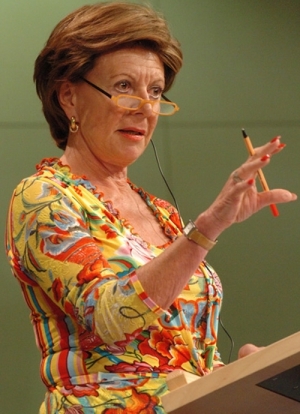
The European Union's Digital Agenda commissioner Neelie Kroes (photo) on Monday revealed proposals to reduce copper access prices in a bid to encourage incumbent operators to invest in new fibre-based broadband networks, according Total Telecom.
"We need next-generation networks to deliver the bandwidth-hungry services and applications that will drive future growth... but there is no agreement on how to foster the deployment of such networks," she said in a speech. "For the time being, telecom companies are hesitant to commit significant funds to fibre rollout."
According to Kroes, alternative network providers claim that copper access prices are too high given that the value of operators' copper assets has "largely depreciated".
"As a result, incumbents prefer to make good, easy profits on legacy infrastructure rather than invest significant amounts in new fibre networks," she said.
However, Kroes also considered the argument put forward by incumbents – that reducing copper access prices will make it harder for network operators to justify charging consumers significantly more in order to recoup their fibre investments.
"They consider it would be unattractive to invest in a parallel fibre infrastructure directly competing with a cheap copper network at a time when many consumers do not yet appreciate the major difference in capacity and service quality between the two technologies," she explained.
This argument was put forward in April by U.K.-based Plum Consulting in a presentation to the European Telecommunications Network Operators (ETNO) association. The consultancy also warned that reducing the price of copper could send the signal to potential fibre investors that the same thing could happen to fibre, thereby hitting returns.
Still, Kroes on Monday proposed that copper access prices could be lowered incrementally and networks gradually switched off once new fibre networks are in place.
"Clients could then be migrated to fibre, and benefit from better services and applications for which higher wholesale and retail prices could justifiably be charged," she said.
"The gradual switch-off of copper could reduce the cost to such a degree that new fibre investments break even in less than 10 years, and thus align the interests of investors and long-term financing providers," she added.
In addition, Kroes also detailed plans to make €9.2 billion available to support investment in new networks and services, €6.4 billion of which would be earmarked specifically for broadband infrastructure investment.
"Through these initiatives, we will establish a predictable regulatory environment – we will favour competition while recognising the cost of investment," she insisted.
Kroes also touched upon the role of mobile networks in achieving the Commission's Digital Agenda goals, calling wireless a "major component in the policy mix".
"Correct spectrum policies will help the rollout of next-generation mobile networks," she said. "That is why I am fighting for spectrum management in the EU to be flexible, competitive and coordinated."