

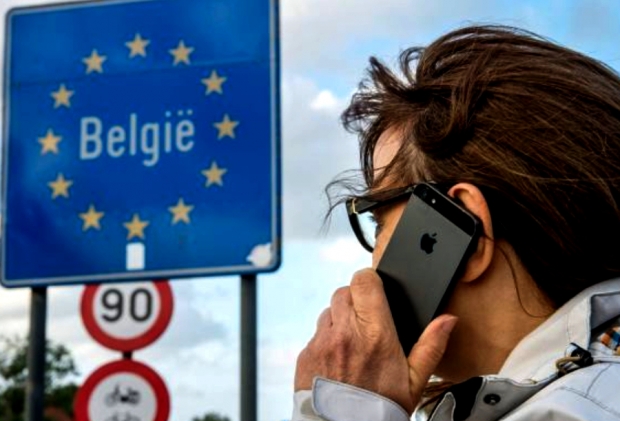
A mixture of European officials, lobbyists and politicians will gather in the opulent 17th-century Upper Barrakka Gardens in the fortified Maltese capital of Valletta to toast a long-awaited success on Thursday evening: the end of mobile phone roaming charges in the EU. The shindig overlooking the Mediterranean marks the culmination of a decade of wrangling between telecoms companies and politicians, with the high charges for using mobile data abroad becoming history on June 15. Or at least that was the plan, according ft.com. Dozens of telecoms operators have already applied to be exempt from the roaming rates to avoid a financial hit, according to industry sources. For consumers in some European countries, the abolition of roaming will not happen. “The EU has been overpromising,” said one person familiar with the debate. “The corks will be popping in Malta anyway, but it’s a Titanic feeling.”
Europe’s largest telecoms companies — such as Orange and Vodafone — will comply with the new “roam like at home” rules, which state that operators cannot levy extra fees for using a mobile abroad.

However, smaller networks, particularly in the Baltic and Nordic regions as well as countries including Belgium, have applied for exemptions to avoid the new rates.
Operators in the Nordics expect a drop of between 1 to 3 per cent in earnings before interest, tax, depreciation and amortisation, according to Bengt Nordstrom, chief executive of Northstream, a telecoms consultancy.
Industry group ETNO had previously estimated that scrapping roaming charges would cost European telecoms groups roughly €7bn in lost revenue by 2020.
Fair-use rules, designed to protect mobile operators from heavy losses, mean that, if “roam like at home” knocks 3 per cent or more off an operator’s net margin, they will be allowed to introduce roaming fees, subject to permission from their national regulators.
Companies in countries where allowances are generous and cheap, such as the Nordics and the Baltics, are the most likely to use this loophole.
Under the new rules, operators can charge phone-company peers up to €7.70 per gigabyte — enough for a month’s worth of emailing and WhatsApp, or an hour or so watching Netflix — when a customer from a rival is using their network.
This means that if a customer is on a contract where data costs less, operators can be left nursing losses. “A year’s margin can be wiped out quickly,” noted one industry lobbyist.
In Finland, for instance, data are cheap and plentiful. Many customers are on unlimited contracts, which let people use their mobiles as much as they like. Consumers in the country chomp through an average of 17Gb per month, the equivalent of watching 20 hours of Netflix, on a mobile device.
Veli-Matti Mattila, chief executive of the Finnish network Elisa, said: “We have the world’s best pricing model — unlimited data.”
“But that means ‘roam like home’ regulation won’t work. If our customer uses 10GB when in Spain, we will get the wholesale bill based on Spanish prices, which is higher than the fixed monthly charging we have with our customer.”
Finland had been part of an alliance of 13 countries that had demanded lower wholesale charges. But this plan was blocked by countries such as France, Spain and Italy — all of which have large tourism industries and telecoms groups for whom high roaming wholesale charges were a potential cash cow.
As a result, companies such as Elisa have applied to national authorities for a derogation from the regulation, allowing them to charge customers a modest roaming fee.
In any case, the charge will be reduced by 88 per cent for data, 36 per cent for voice and 50 per cent for text. “We are not taking out roaming, but taking out roaming pain,” said Mr Mattila.
Consumer groups are not overly concerned about some companies trying to wriggle out of the ban. “Regulators and national consumer groups will keep a close watch on telecom companies,” said Monique Goyens, director-general of The European Consumer Organisation.
“Commission experts, national regulators and consumer watchdogs are carefully watching market developments in all countries to make sure that the new rules are respected,” the European Commission said. It added that 98 per cent of EU citizens had access to a mobile offer with “roam like at home” included.
Wholesale rates will fall to €2.50 per GB by 2022, which will reduce the financial pain for operators — and make regulators less likely to grant opt-outs, she added.
Competition between providers will also rein in any attempt by operators to gouge customers. “Consumers should vote with their feet and switch provider if their operator makes a foul move,” said Ms Goyens.
In Britain, for instance, smaller companies such as Three have offered free roaming in Europe for years, in a bid to win customers from larger rivals.
But Britain’s future participation in the scheme is also in doubt. Countries outside the European Economic Area — which includes the 28 members of the EU along with Norway, Liechtenstein and Iceland — are not covered by the regulation.
While big international operators will be able to mitigate the effects for customers, smaller operators may face stiff charges from European rivals to use their networks — unless a carve-out is achieved during Brexit negotiations.
For officials celebrating in Malta, roaming does not mark the end of the road. Consumer groups and MEPs have their sights set on another of the industry’s cash cows: international calls.
“Prices can still be sky high when someone makes a call from home to another country,” said Ms Goyens. “These prices are often disproportionate to the real cost for the telecom operator. This is what the EU should tackle next.”