
Internet giant's acquisition of mobile handset maker driven by desire for patents, but also provides opportunities in mobile hardware, in-home markets.
Google has agreed to acquire Motorola Mobility for around $12.5 billion in cash in a move that is clearly more about the handset maker's extensive patent portfolio than it is to do with manufacturing capability.
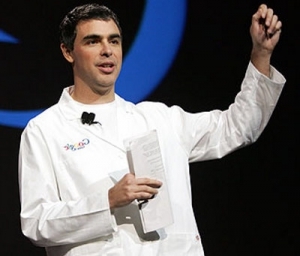
On completion of the deal, "we'll be in a very good position to protect the Android ecosystem," said Google CEO Larry Page (photo) on a conference call on Monday.
Andy Rubin, senior vice president of mobile at Google, also spoke out about the need to protect the company's open-source mobile operating system, which he described as "under threat from some companies". Neither was willing to comment on ongoing legal issues though, including Oracle's claims that Android infringes on patents and copyrights associated with its Java software.
Motorola has more than 17,000 patents issued worldwide and a further 7.5 million pending, Motorola Mobility CEO Sanjay Jha confirmed on the call.
The deal will see Google pay $40 per share for Motorola, a 63% premium on Friday's closing price. The transaction is expected to close in late-2011 or early 2012, subject to regulatory approvals in the U.S., Europe and elsewhere.
Both parties were keen to underscore that Google will run Motorola Mobility as a separate business, insisting that the handset maker will operate on a level playing field with its rivals when it comes to use of the Android platform.
Google spoke to the world's top five Android licensees yesterday and "all showed very enthusiastic support for the deal," said Rubin. "We want to go as wide as possible" with Android, he added.
Google has published messages of support from Samsung, Sony Ericsson, HTC and LG.
"Google will need to exercise careful stakeholder management to ensure that their additional Android partners (Samsung, HTC etc.) foster continued growth of the Android OS outside of purely Motorola," said Fred Huet, managing director of Greenwich Consulting, in a statement.
"While the acquisition provides exciting growth potential, they will not want to put all their eggs in one basket," he warned.
That said, history shows that when a mobile operating system to closely tied to one particular handset maker, the others lose interest. Nokia's failure to encourage rival vendors to take up Symbian is a prime example.
In addition, it seems likely that Google will leverage Motorola's hardware expertise when it comes to developing future iterations of Android, to help it tie the operating system closer to the device.
It will be interesting to see whether Google manages to distance itself sufficiently from Motorola Mobility to keep other handset makers on board, or whether the Google-Moto partnership is setting itself up to take on closed system specialist Apple, in much the same way that Nokia and Microsoft are doing.
"There's tremendous opportunity here," said Page, concluding Monday's announcement. "It allows us to super-charge the whole Android ecosystem."
Indeed, the potential for Google extends beyond the mobile device.
Motorola Mobility has a strong presence when it comes to customer premise equipment, such as set-top boxes (STBs). As such, the move offers Google a route into the living room.
Motorola's Jha highlighted his company's close relationships with carriers in the in-home space and referred to the ongoing convergence between the mobile and STB worlds.
The tie-up with Google will see it "accelerate that convergence and deliver products that will delight customers," he said.