

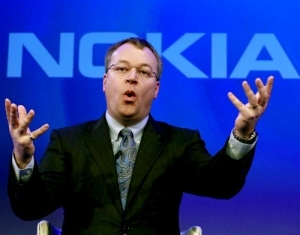
CEO Stephen Elop chalks Q2 up as a quarter of 'significant transition' as device shipments plummet. Nokia chief executive Stephen Elop (photo) admitted on Thursday that lagging demand for his company's high-end devices is spreading to more markets, after the wavering Finnish handset giant reported a sorry set of second-quarter results.
"Q2 was a difficult quarter," he said, during the company's investor call. "The challenges that began in the West are spreading to the East."
He explained that device shipments were hit by higher-than-normal inventories, and smartphone shipments in particular were "impacted by the strong momentum of competing platforms" in Europe and China.
Nokia saw 41% and 30% on-year device shipment declines in China and Europe respectively.
And the slide continued globally. The company shipped 88.5 million mobile devices worldwide, down 20% from 111.0 million in Q2 2010, and down 18% sequentially from 108.5 million. Nokia's smartphone division, which has been steadily losing market share to the likes of Apple and various Android-powered rivals, shipped 16.7 million devices, down 34% on last year's 25.2 million. Mass-market phone shipments also declined, falling to 71.8 million from 85.8 million in Q2 last year.
Elop admitted that Nokia has seen weaker demand for its handsets from some of its operator partners too, adding more evidence that consumers are shunning its products. As a result, he said that Nokia will put a renewed focus on its sell-in strategy.
"We must ensure that the advantages of our product portfolio are understood by our retail sales partners," Elop explained.
Meanwhile the CEO's upbeat comments about the encouraging response Nokia has seen to its low-cost, dual-SIM handsets in emerging markets did little to detract from its poor financial results.
Nokia swung to a loss of €492 million in the three months ended 30 June, from a profit of €104 million in the same quarter a year ago. Group net sales declined 7% on-year to €9.3 billion.
Nokia is in the midst of a drastic shake-up that has seen it abandon its flagship Symbian operating system and dramatically scale back plans for its unreleased MeeGo platform in favour of developing smartphones powered by Microsoft's Windows Phone 7.
It has also restructured the company, announced plans to cut 4,000 jobs, and scrapped its Ovi brand, using instead the Nokia name for its range of mobile applications and services.
Nokia on Thursday also said its cost-savings will come in above the €1 billion it had forecast for the end of 2013, but it did not give a new figure.
"Q2 marked the start of a significant transition," said Elop; however, he insisted that the company is "executing very well" on its turnaround plan.
He also reiterated Nokia's plan to launch its first Windows Phone-powered handset before the end of the year, and said the company is targeting a number of different price points for its Windows Phone range, enabling it to compete more effectively with low-cost Android smartphones.
"We plan to ship [Windows Phone] products in volume during 2012," he said.