
Smartphone use will outstrip that of more basic feature phones for the first time this year as people increasingly rely on mobile devices for their internet connection. But both will be quickly dwarfed by connections in the so-called “internet of things” in the next few years, according to new research from Ericsson, the Swedish telecoms group, according ft.com. Ericsson predicts that the sensors, appliances and machines linked to the internet of things will overtake mobile phones as the largest category of connected device by 2018.
Close to 16bn of the 28bn devices connected by 2021 will be in internet of things (IoT), the company estimates, with a growing range of uses from enabling smart cities, cars and homes to mobile healthcare and diagnostics.
The number of IoT devices is projected to grow 400 per cent by 2021 in western Europe alone, driven by regulatory requirements for smart utility meters and growing demand for connected cars.
Rima Qureshi, chief strategy officer at Ericsson, said the development of 5G networks from 2020 would provide capabilities critical for IoT.
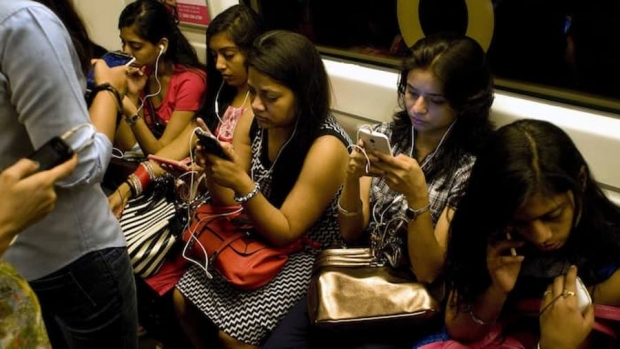
More traditional connections will continue to increase for mobile devices, although more basic phones will increasingly be phased out. Ericsson said that smartphone subscriptions will surpass those for feature phones in coming months.
By 2021, smartphone subscriptions will almost double from 3.4bn to 6.3bn, meaning that most adults on earth will have adopted some form of connected mobile device.
This will be supported by growth in Middle East and Africa in particular, where mobile broadband subscriptions will grow fourfold between 2015 and 2021. Mobile data traffic in India is predicted to grow fifteen-fold by 2021.
In a report published on Wednesday, Ericsson also pointed to the changing use of smartphones, with a particular growth in adopting devices as a means of watching television.
Ericsson found that the use of cellular data for smartphone video grew 127 per cent in just 15 months in 2014 and 2015.
The time that teenagers spend watching TV and video on a TV screen has dropped 50 per cent between 2011 and 2015, but viewing on a smartphone rose 85 per cent in that time.