

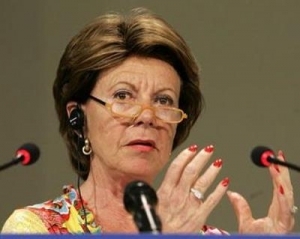
Neelie Kroes, the European Commissioner for the digital agenda, is taking an increasingly radical approach to putting Europe back in the mobile technology cat-seat, where it sat in the 3G era, according Rethink Markets. She plans to invest heavily in '5G' development projects and to accelerate moves to free up and harmonize spectrum on a regional level. She said spectrum auctions could potentially be handled at an EU-wide level as part of a major revision of telecoms rules across the Union, which is ongoing. "Why not?" she said, adding that she is ready to use the EC's legal powers to ensure spectrum does not lie fallow or get sold purely to boost national treasuries. "Some ministers of finance are sitting back and saying 'that'll do nicely', when governments sell off spectrum at a high price to boost national budgets," she added. "Money gathered in auctions is not spent on investment...Citizens get the bill from their telecom operator."
She is frustrated that only 10 of the 27 EU nations have commercial LTE so far, but said:"We've already fixed a target to find a total of 1200MHz of spectrum for wireless broadband. But as reported by TelecomEurope, she said: "On average national governments have only awarded 65% of the spectrum we have already harmonized in the EU. So when Member States aren't implementing legal commitments, we will use our full powers." Her fine words are somewhat compromised by recent cuts to EU budgets, which have hit universal broadband plans including some wireless-based projects, but she told reporters - after a meeting last week with telco CEOs - that she was in "fighting spirit" and determined to speed up the roll-out of LTE across the union of 27 nations.
She was also looking ahead to the next generation of technology - although at Mobile World Congress, the 3GPP was warning against bandying around the term '5G' too early. The standards body does not expect another complete rethink of the mobile architecture, which would merit the badge '5G', until late in the decade. However, Kroes is putting some money where her mouth is and pledging more funding for wireless R&D. She is committing €50m ($65m) at '5G' research and set a 2020 goal for the "delivery" of 5G - even though definitions of what that would entail remain necessarily vague, given that work has not even started in the standards bodies. However, it is clear that the next architecture shift will accommodate the internet of things as well as even greater data efficiency.
Kroes said: "Rolling out today's networks is important. But what comes after? For the next global standard, and the next generation of technology, will Europe lead the world, or merely follow?" The new funding includes €16m for the METIS project which is looking at faster mobile broadband technologies which boost power and spectrum efficiency. The vendors involved in that project include operators Deutsche Telekom, France Telecom, Telefonica, Telecom Italia and Portugal Telecom, plus vendors Alcatel-Lucent, Ericsson and NSN), and academic institutions. "Europe used to lead the world on wireless. European 5G is an unmissable opportunity to recapture the global technological lead," Kroes said.